About Enviro Energy Products!

Enviro Energy Products is a family-owned business run by a father, son duo from South Eastern Pennsylvania.
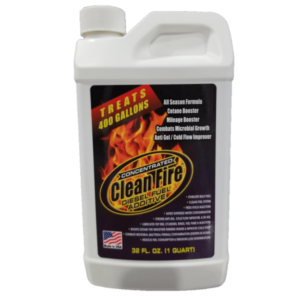
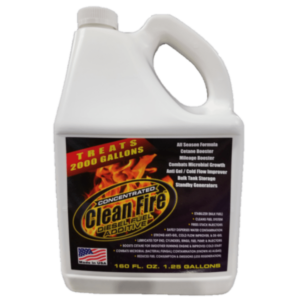
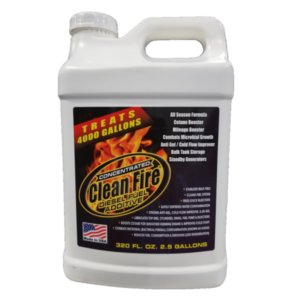
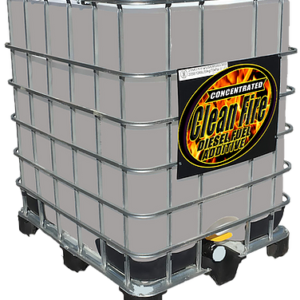
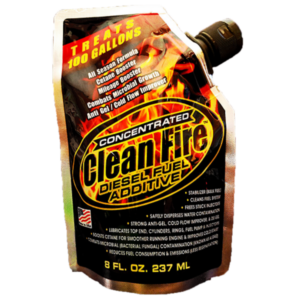
We are an independent distributor of Clean Fire Fuel Additives, a product which we use in our own trucks and equipment.

Enviro Energy Products is a premier distributor of Clean Fire diesel fuel additives. Diesel has numerous inherent flaws that fuel producers have chosen not to address in favor of lower quality and higher profits.

"Company Owner" Darryl Siemens

Benefits of using Clean Fire

Lubrication & Detergent

  • Lubrication
    Clean-Fire Lubricates the Fuel Delivery System,
    Injectors, Fuel Pump,
    O-rings along with the Upper Ring of Pistons this will reduce cylinder
    wall wear and maintain efficiency while extending the life of the
    engine.

  • Cleaning
    Combustion detergents are beneficial to the combustion chamber and exhaust. A
    detergent will clean and maintain deposit free surfaces of the valves,
    piston dome, injectors, rings and remaining combustion chamber. Clean
    Fire contributes detergent ingredients to the fuel, which allow minimum
    internal deposits. A clean combustion chamber will permit better timing
    of the ignition, atomize air and fuel mixture. With the decreased
    pre-ignition obtained with detergents, increase of power and fuel
    economy will be regained.

Environmentally Friendly

  • Manufacturing
    Clean-Fire products are manufactured using Ecologically sound practices and ingredients. It is important to us that our products are manufactured in an environmentally safe manner.

  • In Use
    Clean Fire products improve the combustion of diesel engines, as a result they greatly reduce the environmental pollutants emitted by your engine. Clean Fire products do not release or create additional harmful chemicals or by products during use. 

Water Contamination and Microbial Growth (Algae)

  • Water Treatment
    Water disbursement must be applied in safe volumes. In order for water disbursement to be safe on the fuel delivery system and injector nozzles, the disbursement size of water should be at 1 micron.  Removing water through chemical treatment should be viewed as a maintenance precaution to keep a system clear.  If large amounts of water are present, fuel shocking and mechanical extraction must be used.  During cold weather, fuel filter failures are blamed on gelled fuel when in many cases, the real failure is linked to frozen water in the fuel delivery system.  Good water disbursements should be added well before exposure to cold weather in order to remove any excess water from the system. In addition, minimizing your water content in the fuel system, helps combat algae growth.

  • Anti Microbial
    Algae (single cell fungi) is an important concern to all consumers of diesel and bio-diesel fuels.  This is controlled by, (in most cases), keeping the water content to a minimum.  Algae will thrive in an environment of water and oxygen.  In petroleum diesel, the algae will thrive on the paraffin in the fuel.  Bio-diesel fuels have additional issues with water and some of the organic properties.  Clean Fire maintains a clean fuel delivery system by safely extracting water in volumes that will not harm injectors and filters.  It is imperative to remember the removal of water from fuel should be at 1 micron droplet size. High volume water extraction will contribute to filter clogging.

  • Note: Depending on algae concentration and water volumes, it may be necessary to mechanically remove excess water. If algae volumes are beyond chemical treatment, please contact the Technical Department at Global Energy Research & Development, Inc.

Cetane Enhancements & Cold Flow Improvers (Anti-Gel)

  • ​​Cetane
    Cetane is a part of fuel that has a correlation to cold start up temperatures under compression of fuels without the use of spark plugs.  Cetane has been found to be helpful to the diesel engine up to 50 cetane.  The benefits are not as evident when these levels increase beyond 50. Most suppliers try to provide levels of 44 cetane; it is the national average.  However, it is not uncommon to find number 2 diesel fuel cetane numbers ranging from 37 to 45.  The cetane improver in Clean Fire can raise the cetane as much as 6 numbers.  The benefit of higher cetane has been found to improve engine performance while under load and acceleration.  Increased cetane in the diesel engine will generate more efficient compression ignition thus allowing the equipment to run quieter.

  • Proper Use
    Proper use and understanding of cold flow improvers (Anti-Gels) is a must for safety and cold climate operations. The subject of Anti-Gels safety must be understood. Some may create a false sense of security when operating in cold weather. One must know the limits of the base fuel, the additive cold flow, and the use of #1 blends. Additional precautions must be taken with bio-diesel or bio-diesel blends. Most straight bio-diesels have a much warmer range of operability. Cold flow chemicals are designed to keep the paraffin in fuel from attaching to each other. This will help maintain a small enough paraffin size to safely pass through the fuel filter system. Care must be taken and understood; With a proper cold flow improver (Anti-Gel) (De-Icing) package, cold weather fuel failures are reduced drastically.

Fuel Storage

  • ​​Storage
    Fuel, like many things is at optimum performance levels after initial refinement. This includes bio fuels as well. Ignition quality and consumption rates are affected negatively as fuel ages.  If fuel is stored for long periods of time, a fuel stabilizer must be added to the fuel.  It is wise to also include a water and algae additive package to the fuel that is being stored.  Old deteriorated fuel may harm fuel delivery systems, such as: pumps, injectors, clog fuel lines and filters.  Weak seals on fuel tanks and poor handling of the fuel, can contribute to contaminants in the system.  Some of these contaminants to the fuel delivery system are: the allowance of water, dirt and other non-petroleum matter.

  • A noticeable reduction in fuel quality of number 2 fuel begins in 25 to 35 days after refinement.  A fuel stabilizer must be added to reduce fuel deterioration.  No fuel should be stored without a stabilizer.  Clean Fire contains fuel stabilizer as part of its multi- function package.

OEM Warranty – Product Liability

  • Warranty
    The usage of Clean Fire will not void warranty.  If any product damages a particular area of the equipment, the affected area may be voided from the warranty.  However, the rest of the equipment is still under OEM Warranty.  Any damage, from the use of the products are covered under the product liability insurance that Clean Fire Diesel Fuel Additive carries through its parent company Global Energy Research & Development, Inc. Clean Fire has never had a claim filed against the product liability.  Copies of product liability insurance available upon request.

Mr. Costley

My truck has a 6.7 Liter engine Odometer 136,635.6 miles.  I bought this truck new. I have been the only driver. I have used Clean-Fire in the truck from the first tank of fuel. I used Clean-Fire in both of the previous two trucks. The truck previous to this one was a 2003 7.3 Liter Ford. When I traded that truck in, it had 389,000 miles on the original engine. I am extremely pleased with Clean-Fire and the results that it gives me.

Baxter

“I was looking for a diesel fuel anti-gel that was more than just an anti-gel, with that being said when the dealership I work for started selling it I grabbed a jug to see what it was all about. I have ran clean fire for a little over a year, through one winter all summer and now the start of another winter. While using clean fire I have had no gelling issues what so ever, and have even seen an improvement in cold weather starting. I’m sold on it.”